Subway | Eat Death™


I’ve recently renewed my dialog with Subway, sparked by the news of them rolling out a gluten-free menu.  Here’s how it’s going down:

From:

ERiC AiXeLsyD <world.and.lunar.domination@gmail.com>
Date: Tue, Jan 25, 2011 at 11:16 AM
Subject: Gluten-Free Menu Options in Texas?
To: Paula Gomez <gomez_p@subway.com>, Rob Searfus <R.Searfus@sfaft.org>, Mack Bridenbaker <m.bridenbaker@sfaft.org>, Christine Sumecki <c.sumecki@sfaft.org>, Subway Customer Care Team <asksubway@subway.com>, “B. Pingarron” <b.pingarron@sfaft.org>, “M. Luby” <m.luby@sfaft.org>, “Anna Marie Seeley (Customer Care Representative)” <seeley_a@subway.com>, Kevin Kane <kane_k@subway.com>

Hello Friends at Subway,

I write to you today because we have had a dialogue going in the past about food allergies and cross-contamination that I would like to continue.  I have recently read a few articles online informing the masses that Subway plans to roll-out some gluten-free menu options in the Dallas & Tyler Texas markets soon.  If you would like to read the articles in question, here are some links:

While I would like to be able to applaud this effort, I also find it quite frustrating.

I am quite proud of Subway as an organization when I read such responsible things like “The baked goods will arrive pre-packaged and individually wrapped. Employees will be educated on how to cut the bread using a pre-wrapped knife to avoid cross contamination.”  I mean, really… this is a novel idea and a stellar effort as well as great news for Celiac afflicted potential Subway customers.  Certainly lines like “Also, to further avoid cross-contamination, that same Sandwich Artist will prepare the order from beginning to end, ensuring a 100-percent gluten-free meal” offer a level of comfort to those who must dine gluten-free.  While other restaurants have offered gluten-free menus, you seem to understand that a knife that cuts a regular bun cannot also cut the bun of a gluten-free selection.  This would, I imagine, be quite a worry for a wheat-allergic or Celiac person.  I can imagine this scenario quite well, actually.  You may remember my past missives expressing my allergy to shellfish (and more specifically to your “seafood” sub offering).

This is where my frustration sets in.  I have written to you on multiple occasions expressing the frustration for not only my shellfish allergy, but all of the “top 8”; Milk, Eggs, Peanuts, Tree Nuts, Fish, Shellfish, Soy, & Wheat.  Why have you picked this opportunity to only concentrate on the wheat?  There are others too… I know of people with tomato and pepper allergies that would be thrown into the same anaphylactic shock that I would given I were to take a bite of unknowingly deathfish-laiden lunchmeat.  While you seem to understand the importance of a gluten-free knife… what about a cheese-free, tomato-free, and shellfish-free knife?  Perhaps you have forgotten my previous letter with a few colorful illustrations of the contaminated knife issue.  I will repost here for your convenience:

Then we have the community knife.  If one were to cut someone’s seafood sub with that knife, wipe it off, then cut my sub, there are STILL allergens on that knife, enough allergens to kill me.  Do you want me to be thrown in to an Anaphylactic fit?  I doubt it.  Well, at least, I hope not.

Think about this – do you share your toothbrush with everyone in your household?  Would you with everyone in your office?  Would you share it with everyone that you pass on the way to work in the morning or with everyone who’s eating lunch with you at the same place where you’re choosing to dine?

Yes, it sounds gross, but those potential germs that you’re no doubt currently horrified of are the same as the very real allergens that will most certainly throw me into instant death.

If that didn’t do it for you, imagine I put a giant dried dog turd on the sandwich board, cut it in half, wrapped it, wiped off the knife [with a re-used dishrag type cloth], and then cut your sandwich.  By Subway’s current logic, that knife is clean and contamination free.  This is most certainly not a pretty picture to you, my friend.  Is it?

Does any of this ring a bell?

Also, I have received conflicting reports on how such issues are currently handled or have been handled in the past.  One reply states…

The Company policy directs our independent restaurant owners / operators to take all necessary precautions to prevent the possibility of cross contamination. This includes the policy of washing all utensils and containers after each use. Each restaurant is independently owned and operated and is the responsibility of the franchise owner to implement and enforce the policy.

Which seems to conflict with yet another reply…

I have gone ahead and copied our Training Department so that further lessons can be addressed with owners and their employees on proper handling.

And, the latest information according to the QSRWeb.com article is that “Sandwich Artists in those two markets will be trained on how to cut the roll with a pre-wrapped knife for one use only.”  So, have they been trained in allergies in cross-contamination already, or not?  Color me confused, my friends.

I’d feel safer if the seafood concoction wasn’t anywhere near the meat & cheese where it currently sits.  I’d also feel safer if the same knife wasn’t used to cut all of the sandwiches, and the same dishrag-type towel wasn’t used to wipe off the knife in random intervals between sandwich slicing.  I’d feel safer if all the sandwich artists, managers, and owners were trained on allergens, cross-contamination, and the seriousness of anaphylactic shock.  I’d feel safer if all stores contained a first aid kit complete with an epi pen and clear instructions for its use.

Why should the Celiac-afflicted feel safer, but the rest of us with deadly food allergies should not?  I look forward to your response, your insights, and how you plan to move forward regarding all potentially deadly allergens and how they are to be handled in your stores.  Thank you once again for your time, I hope to hear from you soon.

Inquisitively,
-ERiC AiXeLsyD

P.S. – I was wondering, when you work in an office for Subway, do you have an in-office Subway in which the employees receive (or make) their own lunch?  Or, is there a Subway nearby where you get free or discounted food?  Or, are you all too sick of Subway to eat there?

And I got this back…

From: Searfus, Rob <R.Searfus@sfaft.org>
Date: Fri, Jan 28, 2011 at 4:31 PM
Subject: RE: Gluten-Free Menu Options in Texas?
To: ERiC AiXeLsyD <world.and.lunar.domination@gmail.com>

Hello Eric,

My apologies for not replying earlier, I was traveling and in meetings most of the week, (as well as attending to some family business).  But enough of the excuses.

Forgive me for not having more product answers, but I’m simply a field marketing representative out here on the west coast.  I have inquired with our R&D department to try and get the answers to your questions.  No replies yet, but this week has been tough for me to get a hold of anyone on the east coast due to the severe winter storms that they have been having (offices closed for at least a couple of days.)

I’ll follow up by e-mail when I get any answers for you.

Thanks, and BTW, what part of the US to you hail from?

Rob Searfus
Field Marketing Manager
Subway® Franchise World Headquarters
16337 SW Leeding Ln
Tigard, OR 97223
Cell: 503-954-5479
Toll Free: 1-800-888-4848 x 4089
Fax 503-579-6715
e-mail: searfus_r@subway.com

IMPORTANT CONTACT INFORMATION CHANGE:  PLEASE NOTE MY EMAIL ADDRESS HAS CHANGED TO searfus_r@subway.com.  Please update your address book to reflect this change.  We are undergoing a technology transition.  During this transition, you may still receive emails from the “sfaft.org” address.  This is not an error, but please enter my new subway.com email address when sending emails.

So I wrote this…

From: ERiC AiXeLsyD <world.and.lunar.domination@gmail.com>
Date: Sat, Jan 29, 2011 at 4:17 PM
Subject: Re: Gluten-Free Menu Options in Texas?
To: “Searfus, Rob” <R.Searfus@sfaft.org>

Thank you Rob,

I had actually wondered if anyone would reply.  I had an email chain going before with a Ms. Paula Gomez & Ms. Ana Seely… but they have been short replies and my main questions have gone unsanswered.

I’m in Pittsburgh Pennsylvania.  Thanks for your time, I hope to hear from your colleagues soon!

-Eric

But in the mean time, I made some pretty pictures.  I can’t decide which one I like the most.

Which one do you like best?

Defining Allergy-Friendly


AllergyEats.com

AllergyEats.com

So, quite a task has been put to the food allergy community by Allergy Eats:  Define what it means to for a restaurant to be “allergy-friendly”.

You may have seen it in a recent re-posting by me, or on your own.  I urge you to form your own response and send it to contact@allergyeats.com.  I figured that I’d use this blog to sort out my thoughts before I sent them on to Paul at Allergy Eats.  I don’t exactly how I’ve morphed in to a food allergy advocate of sorts, but I feel that it’s important to help out any way that I can, and encourage others to keep up work that moves us all in the right direction.  There are already some great comments on the blog, and I’m sure he’s got an inbox full of suggestions already… but it’s important to keep them coming so this can be looked at from multiple angles.

AllergyEats T-shirtI like bulleted lists for some reason, so that’s how I’ll try to organize my thoughts:

  • The restaurant has to have a policy that reaches to ALL levels. Too many times restaurants claim to have god allergy practices, but it doesn’t trickle down to the wait staff, the cooks, or anyone past management.  Having a policy is great, but it needs to be understood and respected through all levels.  I feel comfort in a place when the waitress has the manager or even the chef come out to discuss allergy & cross-contamination issues with me.  Training, some sort of certification, and re-training annually or semi-annually would be excellent.
  • Changing current thinking. This is a good one…  Today at Boston Market, I noticed a sign on top of the cash register that read something to the effect of “If you have food allergies, please talk to the manager before placing your order.”  It’s great they’re recognizing the fact that there are food allergies out there, but… the cash register is at the end of the counter, and only reached well after you place your order.  Also, I’d hope that someone with food allergies would already have a heightened awareness when going anywhere to eat.  (If not, please read this.) More thought needs to be put into place, not just “CYA” measures.
  • They have to exude reassurance. A poster is great.  An “allergy-friendly” menu is great.  A sign at the cash register or on your table or on the salad bar is great… but not enough.  In with the training on all levels, the sever (or whoever answers the phone) must bee confident with the answers that you want to hear.  No “I don’t think” or “not really” or “I’m not sure so you’d just better not order that” will do.  Have the right answers.  Know why.  Understand the severity.  Knowledge of the kitchen and where everything is cooked should be a must for servers and managers.  Nuts can’t just be “picked off”.  There’s no such thing as “oh a little won’t hurt” with butter.  The fryer doesn’t “get hot enough to kill anything you’re allergic to”.  It’s unsettling fr someone with food allergies to dine out.  Making them feel safe is a must for “friendliness”.
    • On a related note… especially the person answering your phone.  When dining out of town, I try to call ahead (or get my wife to call ahead for me).  My favorite response ever was an Amish place in Ohio where I asked if they had shellfish (“like shrimp or crab or oysters” I said)… the girl went on to say “No, we have oysters, but they’re in soup, and there’s shrimp… but it’s not in a shell.”  Needless to say, we didn’t go there.
  • All allergies are equal. It’s great to see “nut free” options, or “gluten-free” menus, but let’s treat all allergies with the same respect to cross contamination.  The top 8 are; Milk, Egg, Peanuts, Tree Nuts, Fish, Shellfish, Soy, & Wheat.  But, there are others too!  I know of people with severe allergies to peppers, and have heard of corn allergies.  These people need to feel safe too!  Current government regulations don’t regulate the labeling of any allergens other than the top 8, so that’s all that people seem to pay attention to.  Special attention needs to be given to all kinds of allergies, not just one allergen or group of singled-out allergens.
  • Know what you’re serving. Are their anchovies in the Italian dressing or Worcester sauce?  Is this fried in peanut oil?  The server shouldn’t necessarily need to know off hand, but this information should be able to be provided upon request. Having it in written form would be tremendous.  (We could go into other special dietary needs here too… not an allergy, but I have an aunt with Diverticulitus who needs to know if there are seeds or nuts that may be ground up and hidden in things like dressing or soups or bread.) Listing all this on a website would be excellent.
  • Separate locations & utensils for allergy-free meal preparation. Cross-contamination is huge.  I don’t worry about a mutant lobster crawling into my mouth by itself… but I do worry (immensely) that some scallop juice might be on the grill where my steak was cooked… or that someone who just made a shrimp cocktail didn’t wash their hands before making my salad.  I’d love to know that the place where I’m dining has a fish or shellfish only fryer, separate grill spaces for different kinds of meat (even a vegetarian/vegan section would be cool), even separate cutting boards, prep areas, knives, and other utensils.
    • Keep the nuts off the salad bar… near their own station.
    • Hey Subway, don’t put the “seafood” sub stuff right next to the other lunchmeat, and don’t cut those subs with the same knife you use for all the other subs!
  • Ability to accommodate the unusual. Say someone has an inhalation allergy to peanuts…  Can you seat them somewhere so that the people at the next table are able to order some peanut-encrusted dessert without throwing them into an anaphylactic fit?  Can you do this without rolling your eyes, sighing, and making it a big deal?
  • Special markers/identifiers. I saw a commenter note this in the comments on the Allergy Eats blog post, and it’s absolutely brilliant.  Something ought to be a literal red flag… in the system, on an order ticket, on the check, on even the plate itself.  Everyone knows that orange-rimmed coffee pots mean decaf.  Why not red for allergies?  Or get crazy & assign a color to each of the top 8 & one for “other” allergies?  Did I read that Legal Sea Foods does double-plating or something to that effect?  It’s genius.  I’d like to extend the symbols idea to the menu too… why not have some sort of system with easily recognized food allergy icons?

That’s my take for now, but there are already many other great suggestions in the comments section over at Allergy EatsPlease, take the time to send yours to contact@allergyeats.com before Feb. 2nd!


AllergyEats | Urgent request for support to help impact REAL, impending food allergy legislation!


This is an important one for my food allergy readers… please take the time to read this post from Allergy Eats and respond accordingly!  This is your chance to have some real input to actual legislation, not just another request to your state, federal, and local officials.

The entire post below is reposted with assumed permission… please re-post, re-blog, re-tweet, use your ham radio or the telegraph, and get the word out.

Urgent request for support to help impact REAL, impending food allergy legislation!

I am reaching out to the entire food allergy community with a great opportunity for us to have an impact on REAL, forthcoming food allergy legislation.

A few months ago, I was invited to work with a governmental body that is enacting a food allergy law pertaining to restaurants.  (For now, please respect my decision not to mention specifics.  I believe doing so could compromise my ability to effectively represent our food allergy constituency.)  I was, and remain, very excited about this opportunity to advocate for our community.

In the course of this group’s discussions, there seemed to be a lingering question – what is the definition of an allergy-friendly restaurant? While I was very comfortable responding to that question myself, I believed at the time that it would be more effective to have community comments, which I was (and am) very confident would support my position.  I suggested that I contact members of the food allergy community, via the thousands of AllergyEats members and social media followers, and solicit as many unprompted opinions as possible.

So here’s what I’m requesting.  Could you please take a moment to answer the following question:

How would you define an allergy-friendly restaurant?  (Please be as specific as possible.)

This is an absolutely critical opportunity to affect not only impending legislation, but legislation that could become a template for other states and municipalities across the nation!

I strongly urge you to take a few minutes to respond to this request.  I believe my effectiveness in advocating for the food allergy community will be directly impacted by how many supporters answer this call.  To that end, please also consider spreading this message as broadly as possible, using social media, blogs, or any other resource you have access to.  The more voices we have, the more effective we will be!

I assure you that I will continue to do my best in advocating for our community and I promise to share more about this particular legislation when appropriate.

Important Note: I need to collect responses by February 2, giving us just one week, so please consider responding as soon as possible.

Again, the question I am asking you to answer is:

How would you define an allergy-friendly restaurant?  (Please be as specific as possible)

Please submit your responses to me at contact@allergyeats.com or feel free to post your comments here on the blog by clicking Comments or Reply.  (Email is preferable, but either is greatly appreciated.)

Thank you for your support!

I’m going to say it even though I shouldn’t have to… comments on this blog are appreciated, but to get them to AllergyEats, please comment on the original blog post or email contact@allergyeats.com.

Sadly, this sums up my general attitude towards dining out with food allergies and “safe” menu options:

http://twitter.com/#!/FoodAllergyBuzz/status/30366826915434496


Prepping for Food Allergy Awareness Week 2011


Okay, so I’m on a roll this morning.  That Subway stuff struck a nerve.  It reminded me that I would like to have more consumer-driven responses to food allergy issues, and less government mandates.  Food Allergy Awareness Week is not for a few months (May 8-14, 2011), but it doesn’t mean that you can’t start getting ready now.

I just wrote to the Food Network, requesting some Food Allergy Awareness.  I used their contact form, and this is what I had to say…

I’m a big fan of all the Food Network shows.  I’d love to see an Iron Chef battle where they can’t use any of the “top 8” allergens.  I am allergic to shellfish, and always recoil slightly when it’s a lobster or crab battle… or when the inevitable prawn works its way into a dish.  There is a Food Allergy Awareness week every May.  It would be great timing for such an event… and really help the allergy awareness and cross-contamination cause.  There are MANY food-allergic foodies out there!

I’m sure you’re aware that the top 8 allergens are Milk, Eggs, Peanuts, Tree Nuts, Fish, Shellfish, Soy, & Wheat.  TO have an Iron Chef battle where they ahd to prepare meals without any of the top 8 allergens would be truly epic, and help show others out there that there ARE indeed alternatives & work-arounds when dealing with a life-threatening allergy.  Food allergy awareness week this year will be May 8-14, 2011.

Thank you for your time, I hope to hear your thoughts on this matter!

-Eric

I’d like to ask that you also write your own letter or email.  And, why stop at one? Please, share with me other places where you think we ought to write, and I’ll write to them too!

I’ll definitely be writing more, perhaps armed with statistics like the following (from Top8Free.com):

Prevalence of food allergies in the United States

Ninety percent of food allergies in the United States are caused by eight foods:  Milk, egg, soy, peanuts, tree nuts, wheat, fish, and shellfish.  This website is dedicated to a diet free of these allergens.  Of course, it is possible to be allergic to just about any protein.  In Japan, rice allergy is one of the offenders.

Just to give you a sense of how many kids are suffering from food allergies today, here is a table of the most common food allergies.  This does not count children with milk-soy protien intollerance or Celiac disease, only children with Ig-E mediated food allergies.

Percentage of young children with allergy to:

  • Milk 2.5%
  • Egg 1.3%
  • Soy 1.1% (There is little agreement on this number.  Estimates range from 1 to 5%)
  • Wheat 1.0%
  • Peanut 0.8%
  • Tree nuts 0.2%
  • Fish 0.1%
  • Shellfish 0.1%
  • Overall 6 to 8% of population

Percentage of adults with allergy to:

  • Shellfish 2.0%
  • Peanut 0.6%
  • Tree nuts 0.5%
  • Fish 0.4%
  • Milk  0.3%
  • Egg 0.2%
  • Soy 0.2%
  • Overall 3.7%

Source: Hugh A. Sampson, MD. “Update on food allergy“, Journal of Allergy and Clinical Immunology, May 2004

While writing to politicians does gain some inroads, there are other productive avenues to explore.


FAAN & Food Allergy Guidelines


Yeah, I know I just blogged about Food Allergies, & I try not to beat that subject to death, but Twitter was blowing up this morning on this subject, so I felt that I needed to say something.

Here are some tweets & re-tweets:

What does all this mean?  As far as I can tell, it’s just a coming-together of the powers that be in the food allergy world to say, “Hey, if we’re gonna get anywhere with awareness & treatment, we’re gonna all need to get on the same page so we can move forward.”

If this is of interest to you… I urge you to check out the following links to read-up on what it means for those afflicted with food allergies:

Hopefully, you’ll find the time (like I hope to) to be able to take that all in and see what it means for you & your friends or family members who may be deathly allergic to something that’s in kitchens, food processing plants, grocery stores, & other food venues all over the place.


AllergyEats interview with CEO of FAAN…


I’ve been meaning to reblog this for a a few days, but it’s been a hell of a week.  I haven’t posted any food allergy propaganda in a while, so I figured it may be time.

Check out this article from AllergyEats: An interview with Julia Bradsher, CEO of FAAN

An excerpt that got me a little excited:

Restaurant legislation is starting to get introduced in other states, too.

In Pennsylvania, House Bill 45 would require training programs designed to prepare candidates for certification exams to include training on food allergies, including a video and written materials.

Legislation in PA?  I need to do a little more research and some letter-writing.

While I generally would like to see a consumer-driven allergy-friendly service movement because I feel the “want to” motivation is better than the “have to” motivation, I don’t see legislation like this as a bad thing at all.  More education, information, and training on food allergies can only help everyone involved… and  hopefully over time help food allergy issues to be taken more seriously than they currently are.

While you’re over checking out the AllergyEats site, don’t forget they’re giving away free T-shirts!


Cake-Baking Hooligans


Testing out this Blackbird Pie Tweet-embedder that WordPress is talking about…

Apparently all I have to do it put the tweet’s url on a line all its own, and it imports the whole thing.  Pretty snazzy.

Really though… if I rode around in the back of my Subie or in the back of the wife’s Scion (assuming the seat was down), I’m pretty sure I’d get a ticket.  Even if I had the Ark of the Covenant that we had just rescued from the infamous  secret government warehouse… I’m pretty sure I’d still get a ticket.  Yet, these people on TV get a free pass.

Not that I’m a staunch seat-belt law supporter… but it is a law now, and I wear one as it has saved me from serious injury in the past.  Maybe I’m completely off base, as this does happen in other states where they might not have click-it-or-ticket laws.  I remember riding with my cousins in the back of my dad’s GMC pickup (with a cap) from here all the way to Myrtle Beach when I was a little kid.  Nobody died, and it was actually a fun trip.

I just think it’s funny that one can do something illegal on camera, broadcast it, and face no repercussions… yet I park on the street in from of my house 1 or 2 days a year on a non-holiday weekday between certain hours or on a street-sweeping day and I get a ticket.


The Spencarian’s Benjamin Kirby | Thoughts on the ACS…


So, you ready my letter to anyone who would listen about the American Community Survey, right?  Hopefully you’ve also read the amusing reply from PA State Rep. John Maher.  Now we have the thoughts of political blogger, Benjamin Kirby of The Spencerian.  Through the magic of Google I happened upon his blog, saw that he liked answering political questions, and (of course) asked my question(s).  I got an excellent reply…

from: Benjamin Kirby <bkirby816@yahoo.com>
to: Recrat Demopublican <recrat.demopublican@gmail.com>
date: Thu, Oct 21, 2010
subject: Re: A POLITICAL QUESTION: The American Community Survey?

Hey, great letter, Recrat!  Really good.

I’ll try to answer it on the blog — you’ll have to forgive me if I don’t re-post the whole thing.  I’ll try to do your general concept justice, though.

Just as a quick answer, let me say that I think you’ll see huge changes in things like the ACS as well as the ten-year census over the next five to ten years.  We have Facebook, Twitter, and who knows what else in the future.  There is almost no reason to cut down a forest to do the ACS.

That said, I know some people who rely on the data the ACS provides, and it.  Is.  Critical.  It’s really important stuff, and it’s so important that people fill it out, that they’ll do whatever it takes to get their attention.  There’s the old marketing adage: tell them what you’re going to tell them, tell them, then tell them what you’ve told them.  And the only way the government can do that efficiently right now is through snail mail and paper.  Sounds weird, I know — but it’s true.

We’ll explore this more in the post in the next few days.

Thanks so much.

BJK

…and it was followed-up by a blog post:

Q & A: Answering a Question with a Question

I won’t re-post the whole thing here, but I would urge you to check out his blog, and post your comments there or here.

An excerpt…

First of all, let’s be totally fair to Recrat: he asked a great question.  The only problem with it was that it was in the neighborhood of, oh, around 1,250 words.  The highlights he asked about involved wasted resources in producing the U.S. Census Bureau’s American Community Survey in the area of money, time, energy, and paper.

Ha ha.  Sorry for being wordy, but…

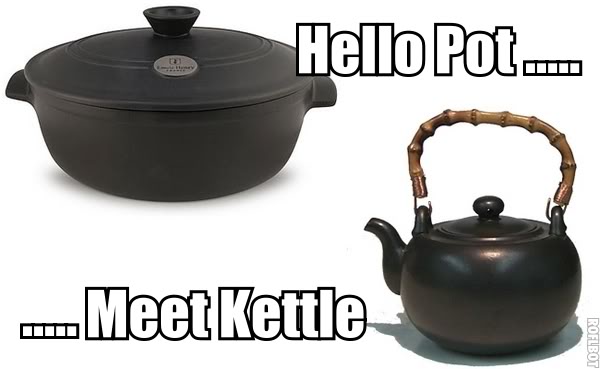
Hello Pot...  ...Meet Kettle.

I guess it’s in all of us blog people. 

ACS Response from John A. Maher (PA House of Representatives)


I sent my letter about the American Community Survey to several politicians… from the mayor of my little town, to the mayor of Pittsburgh, to Pennsylvania representatives & senators, our US representatives & senators, and even the President Himself.

Only one politician has replied so far, and it’s been about 2 weeks since my missive first went out.  I figured it’s time to share, although I may keep trying.  Maybe this warrants some more snail mail.  Our first response comes from Pennsylvania State Representative John Maher:

– ★★★ –

from: John Maher <jmaher@pahousegop.com>
to: recrat.demopublican@gmail.com
date: Fri, Oct 22, 2010
subject: ACS
mailed-by: pahousegop.com

Congratulations on creating the most notable email nomme de plume that I have seen in some time!

I have a special appreciation for your experience, having been selected myself for the extended census exercise in 2000 AND 1990.  (While that is certainly not a statistical impossibility, it did cause me to ponder the veracity of the sampling method.)

Across the decade ahead, trillions of dollars of taxpayer money will be “driven out” to states, school districts, local governments and others feeding from the trough of the taxpayer using formulae anchored to the census results.  Getting the data right to begin with strikes me as a desirable goal.  Could the Census folks be more efficient?  I thought so before and am emphatic now.  Those selected for the expanded survey should be provided an access code and directed to a web site to complete the process.  Not only will forests of paper be saved, but tallying the results will require no human processing either.  Those without access to computers would dial a toll-free number, tap in the access code, and the pound of paper could be delivered.

I recall attaching a note to that effect with my response to the 2000 survey but the federal government is generally uninterested in the thoughts of a state legislator.

A larger complaint for me arises from seeing how census and other data is not used thoughtfully to measure or address concerns in a scientific, unbiased manner, but rather exploited selectively as raw ingredients to contrive formulae that accomplish what those with such power wish to accomplish.  When government behaves that way (which seems to be frequent), why bother collecting the data at all?

Thanks for taking time to send along such a thoughtful note.

John

John A. Maher
Member, House of Representatives
Commonwealth of Pennsylvania

– ★★★ –

I like this guy.  His words aren’t calculated, his opinions aren’t guarded, and he has an obvious disdain for the large bureaucracy of the federal government.  (…perhaps a little animosity there too, or is that just me?) I have to agree with his last paragraph there, it seems like that backwards science all the conspiracy theorists spout about.  Just how is this data being put to use?  Shouldn’t the government already know how many people are living here and how much I made last year by looking at my Taxes?

I wrote back, and haven’t had a second reply, so I’ll leave you with my last communication:

– ★★★ –

from: <recrat.demopublican@gmail.com>
to: John Maher <jmaher@pahousegop.com>
date: Mon, Oct 25, 2010
subject: Re: ACS
mailed-by: gmail.com

Thank you for your swift & thoughtful reply, Congressman Maher!  I’m also gald you enjoyed my nomme de plume, ha ha.  I almost feel a fear for speaking my mind… something I was raised to believe should never be a problem in the great country in which we live.

I can understand your frustration with the federal government as a state legislator.  The states were originally given the majority of power.. and it seems to have shifted over the last century.

I agree completely with your assessment that we ought to be given an access code to complete the survey via internet or toll free phone number.  I’ve been e-filing my taxes since I was able, and before that I remember doing them by phone along with a simple questionnaire/help sheet on news print… that had to be over a decade ago now.  The waste associated with this whole thing is just mind-boggling.

While I understand the need for the federal government to collect data for programs they deem necessary, why not let local governments address the problems in their area, then ask the federal government for support to create their own solutions?

I really do appreciate your reply, and I will pass your name on to other voters as someone who cares about the people that they represent, and is up to the times with electronic communication.  You may be interested to also know that yours is the first reply I received out of the dozen or so politicians, government agencies, and political pundits that I’ve contacted via webforms or email… and so far the only politician to reply!

Keep up the good work, and as a citizen, I thank you for your service & commitment to the people!

-Recrat Demopublican

– ★★★ –

The American Community Survey – A letter to anyone who will listen/read/answer…


I did blog about the 2010 Census and the American Community Survey before, but I felt that my blog wasn’t enough.  I decided to try and reach out to the government, some politicians, some political pundits, and even one political blogger to express my concerns.  I’ve been sitting on this a while waiting for some more concrete replies, but there haven’t been that many.  We’ll get to the replies in later posts, but first I (with Editing help from Dave of course) present to you the letter:

– ☆ · ⌘ • ✍ • ⌘ · ☆ –

Dear [Gub’ment Employee],

Thank you for taking the time to make yourself accessible via email and/or the web, and available to address my concerns.  I realize that as a steward of the people and a government employee, your time is quite valuable. The point of my missive is speaking out against what I view as the waist of resources, money, and even time, so I will try to get right to the point.

Recently, I was notified via mail that I was a picked “at random” as a participant in the American Community Survey.  Then, a week or so later, I received the survey itself.  If it follows the same pattern as the 2010 Census, I will get two more notifications, and someone will show up at the door to ask me the questions even though it has been filled out and sent in.  Barring any other concern about the 2010 Census and focusing on the ACS, this is what I (along with 3 million other Americans) received:

  • Pre-notice Letter
  • Introductory Letter
  • ACS Questionnaire
  • ACS Instruction Guide
  • Frequently Asked Questions Brochure
  • Follow-up Letter
  • Reminder Card
  • Outgoing Envelope
  • Return Envelope

For my purposes I’d like to ignore (for the most part) the arguable statistical value of questions like when the building in which I reside was built, what time I leave for work in the morning, and how many people are in my car with me when I go to work.  I do enjoy the extensive reasons for asking each question available at http://www.census.gov/acs/www/ – but *.pdf is a “clunky” way to present them.  I would like to say that your reason for asking about the year my residence was built, “Age of housing is used to forecast future energy consumption” is flawed.  If my building was built in 1920, but recently retro-fitted with new windows, insulation, and a new energy-star furnace and/or central air, it might be better off energy-consumption-wise than a house built in the late 60’s with all original water-heaters, furnaces, etc.  (On a humorous note – remember the infamous man who had a baby a few years back?  Question 24 instructs you to only answer if you’re female and have given birth. He would now be a man and would have given birth. This could not be recorded as instructed.  Perhaps they ought to look at amending that in the follow-up survey 10 years from now?)

But, I did not intend my letter to argue the survey content. I would like to stick to what I believe is a more pressing and relevant issue, waste.  Here is what I feel was wasted in the ACS mailings.

Paper: I am not a crazy environmental activist, and I even question the actual savings when related to energy consumption on recycling, but even I am appalled at the waste of paper here.  That is three letters, a reminder card, the survey itself, a glossy FAQ brochure, and a 16-page “how to answer questions in this survey” booklet, plus the survey itself, and envelopes for all of the outgoing and return mailings except for the card times three million.  The letters alone are 9 million wasted pieces of 8½” x 11″ paper.  Think about that number.  I don’t think I’ve ever seen 9 million of anything.  The survey itself couldn’t have stated its purpose on the opening page without the need of a cover letter?  Did we really need the 16-page guide on filling out the survey?  Including the support phone number wasn’t enough?  I am not even factoring in the ink and envelope glue here.  It is 2010; I would think that most people have access to the internet or a telephone, even if it is someone else’s phone or the internet at a local library (which is still free in most communities, right?).  Why not send out a post-card or registered letter instructing people to take the survey via the web or by phone?  It can’t be much different from what has already been set up as a “support” to the paper survey.

Energy: How much energy was consumed in creating and transporting all of these mailings?  Eliminating the “you’re going to get a survey” and the “you should have gotten a survey” letters alone would have saved so much effort and, I am assuming, electricity unless you have a warehouse full of employees cranking out these surveys on Ben Franklin’s old printing presses.  Even the energy that went into the creation of this thing can be factored in.  How much gasoline and jet fuel was consumed in mailing these surveys?  So, under energy, we are wasting human energy/effort, electricity, and fossil fuels (unless every piece of mail was delivered by electric car from plants that do not use coal for electricity production).

Time: This concern is connected with the human effort element. How many people spent time on this?  How many man hours were spent compiling the questions, deliberating on how to word them, which ones to use and in what order, writing explanations on why they’re being asked, layouts for those designed, extra pamphlets proposed, decided upon, and designed, websites built, toll free help-lines set up, etc?  Then we have all of the labor; the actual creation of the paper, the printing, and the distribution?  How many people will be sent out to ask follow-up questions?  I’ll give you that my time wasn’t wasted in filling out the survey, and I’m arguably wasting more of my own time writing this letter… but what about my time wasted reading the “you’re going to get a survey” and the upcoming “you should have received a survey” letters?

Money: Certainly all of the people involved in this have been paid for their contributions; direct government employees are also receiving what I hear are excellent benefit packages.  If contracted work was used, I’m sure they were paid prevailing wages for jobs done for the government.  I’m sure the paper, ink, and distribution were not free.  I know the government does not pay for mail sent via the postal service, but how does that work?  Does it all actually go for free, or does the post office bill it out to the different government agencies per usage?  And, if you believe the old adage that time is money, then see the preceding paragraph again.  Shouldn’t taxpayers be able to vote on whether we’d like money to go into projects like this survey, or the more pressing social-programs that your survey professes to bolster once all of the information is gathered?  What about something as simple as food for the hungry, medical care for those who can’t afford it, or subsidizing housing for the homeless?  If money is going to infrastructure, why not ask the government employees about the road conditions that they encounter on the way to work on federal, state, and local levels?

While I do take a certain pride in being selected for performing a civic duty, I cannot help but wonder about the deployment of something like this on such a massive scale.  I understand that one may feel that the collection of this data is imperative, but perhaps the process through which it has been undertaken can be reviewed.  Perhaps the next time this survey is taken, eliminating so much paper will be a more viable option with new technologies appearing almost daily.

Thank you again for your time, I really do appreciate that you have made yourself available to read my concerns.

Sincerely,
-Recrat Demopublican
recrat.demopublican@gmail.com

– ☆ · ⌘ • ✍ • ⌘ · ☆ –

I have no idea why I chose to use a pseudonym when the intent was to post it here anyway… but I did.  I’d like to hear your thoughts before I post replies form others.